
|
Male and female sharks of the same species look almost identical. The
only visible difference is the presence of 2 large structures called
'claspers', which are really modified fins, on the underside of the
male. These are important in the mating process and are used to guide
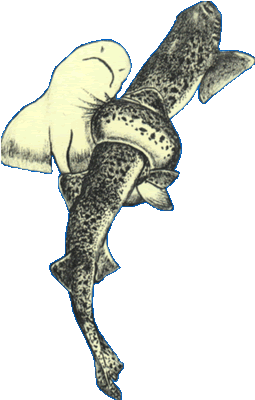
the mile, or sperm, inside the female. In the sharks, it is a much more controlled affair, and there is more certainty of the eggs being successfully fertilised. Shark observers have occasionally witnesses courtship rituals. In some cases, the male makes advances to the female and twines his body around hers, but in many species, the act of mating has never been observed by humans. |
|
 |
Sharks produce large eggs in relatively small numbers, unlike smaller fish such as herring, which produce tiny eggs in tens of thousands. Each egg is provided with a large yolk sac to nourish the developing embryo and is usually protected inside a tough leathery case. The chances of individual eggs hatching are high, so the shark does not need to produce so many in order to ensure its survival. In some species, the eggs are laid in cases in the shape of the familiar mermaids' purse, which so often wash up on the shore after storms. These are usually empty and dried up but sometimes one is found with a tiny fish still living inside it. |
 |